
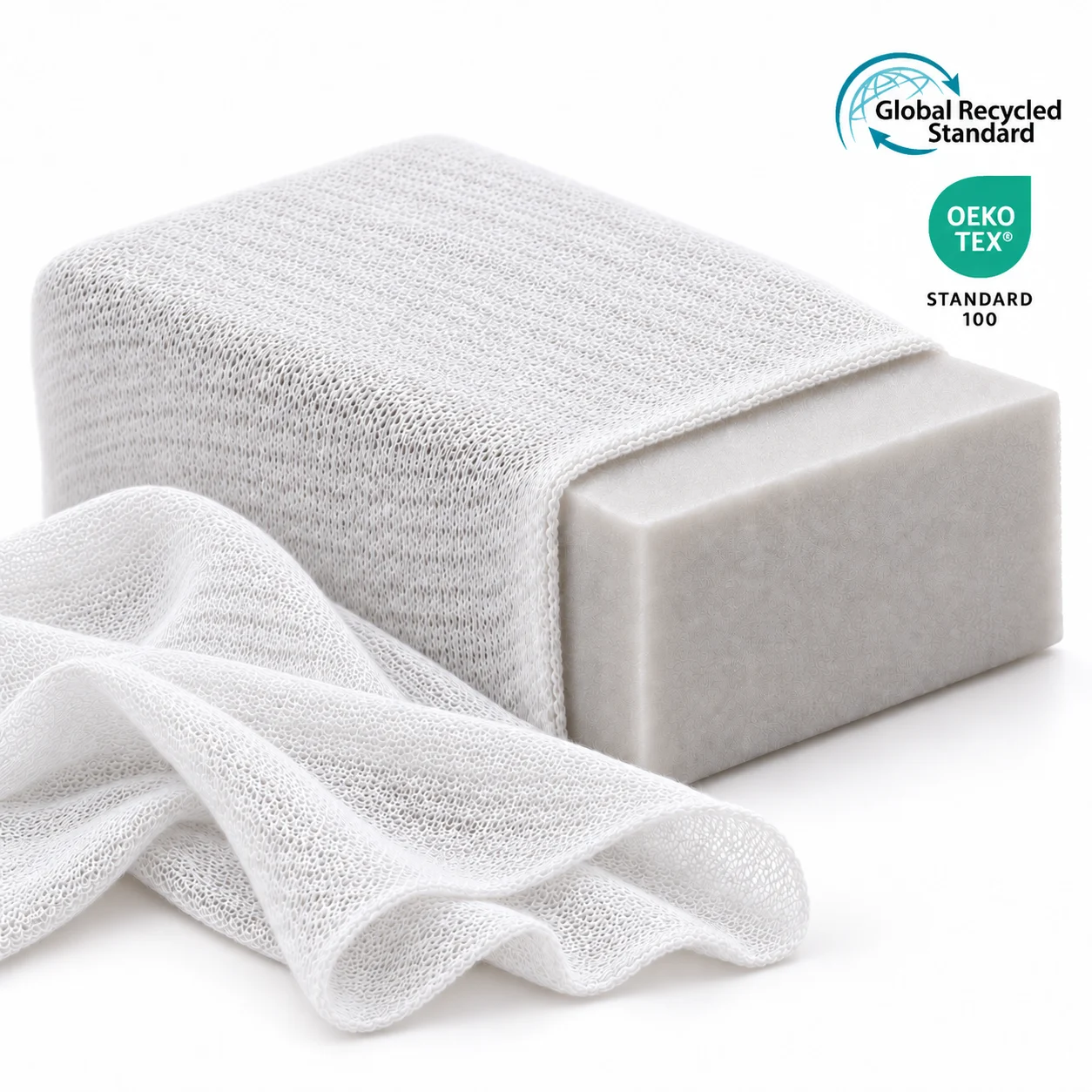
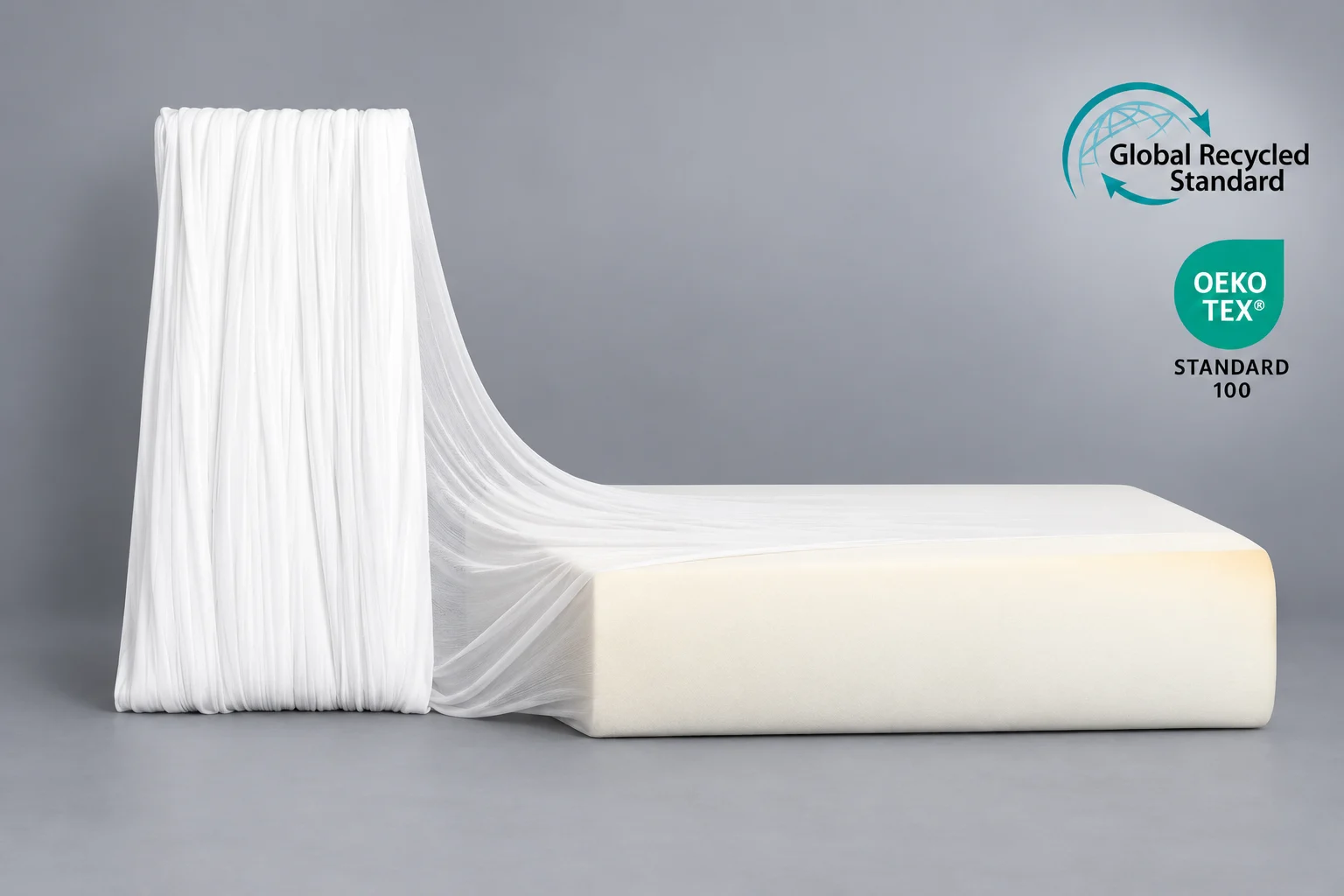
Stockinette for foam wrapping, 30–100 g/m²
Two-way stretch knitted fabric for wrapping foam, mattresses, upholstered furniture and visco, memory foam and orthopaedic pillows. 30–100 g/m², white or black.
| Structure | jersey knit (stockinette) |
|---|---|
| Composition | virgin yarn, 100% recycled rPET or PAN (polyacrylonitrile) |
| Weight | 30–100 g/m² (most often 50 g/m²) |
| Colour | white (standard) or black |
| Properties | two-way stretch, reduces friction between the foam and other layers |
| Industry | Mattress manufacturers, Furniture manufacturers, Sewing workshops, Upholstery workshops |
| Application | Covers and borders, Protective layers, Foam protection |
Ask about price and availability
Leave your email and we’ll send you the price, availability and material details. Add a phone number only if you’d rather talk.
Description
Two-way stretch knitted fabric for manufacturers of mattresses, upholstered furniture with foam, visco (viscoelastic), memory foam and orthopaedic pillows, and for sewing workshops. In Polish plants it is called trykot, in English-speaking markets stockinette, and jersey is the name of the knit structure — all three terms describe the same material.
The fabric can be pulled over foam blocks of different heights and returns to size once the tension is released, so one material covers the whole range of formats. In series production that means fewer stock items and shorter changeovers.
We can supply stockinette in weights from 30 to 100 g/m², with 50 g/m² the most popular choice. You can choose virgin, 100% recycled rPET or PAN (polyacrylonitrile) yarn. Stockinette is white as standard, and in the black version the foam inside the product stays out of sight.
The second role of this layer is to reduce friction. Foam that rubs directly against the cover or an adjacent layer wears faster than through use alone — especially where the cover is removed for washing. The knitted fabric separates these surfaces and takes the movement.
We match the variant to your process: block dimensions and height, packing method, line type and how the material is fed. We do not state fire retardancy parameters for this material — the Crib 5 range is intended for applications that require them.