
Stretch fabrics for foam wrapping and mattress production
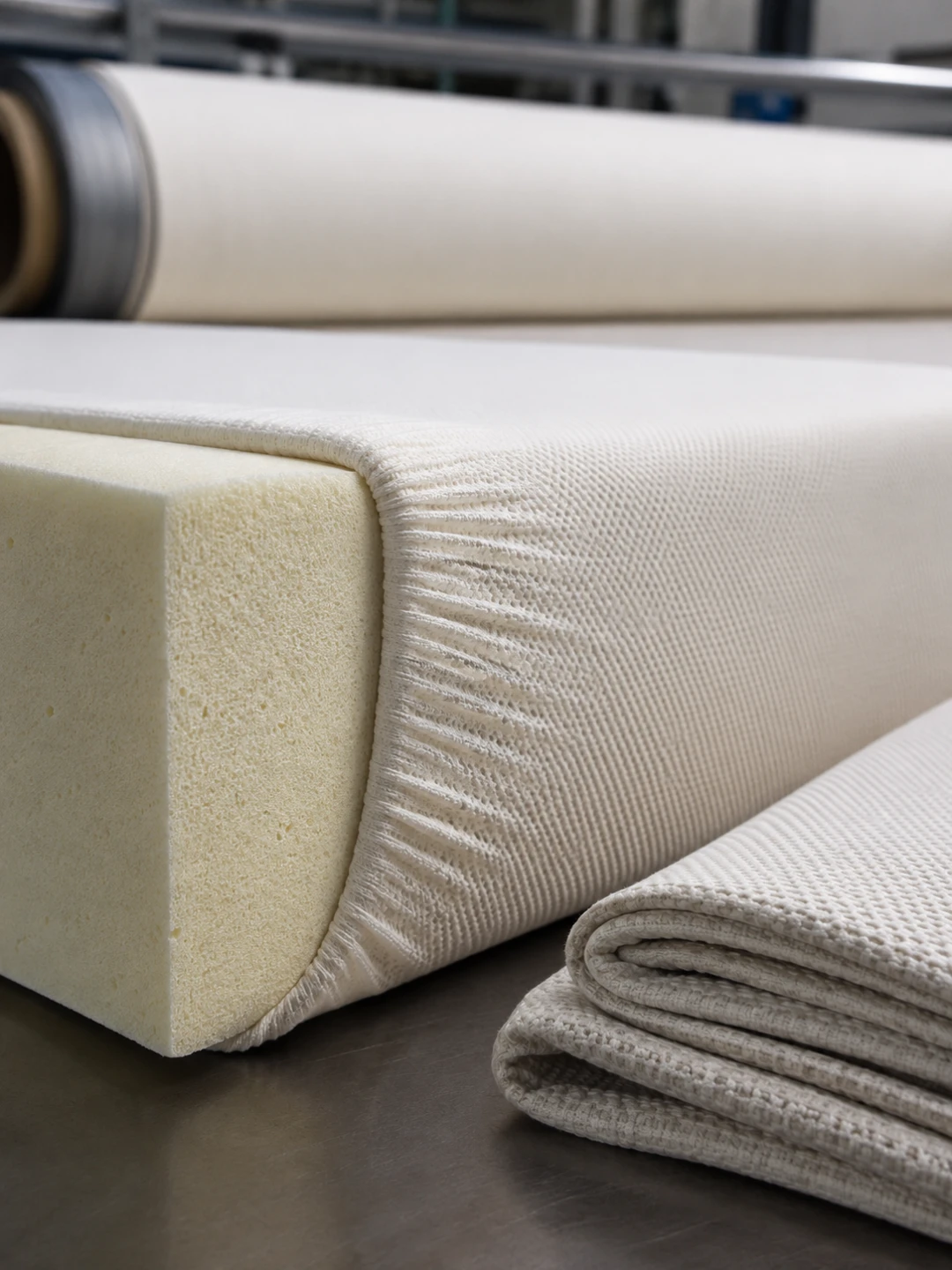
We supply two-way stretch knitted fabric — the same material you may know as trykot, stockinette or jersey. It pulls over a foam block without strain, separates layers that would otherwise rub against each other, and returns to size after decompression. We’ll help you choose the variant for your product dimensions, packing method and production line.
Stretch
Two-way, so one material covers the whole range of sizes.
Applications
Mattresses, upholstered furniture with foam, and visco, memory foam and orthopaedic pillows.
Names
Trykot, stockinette, jersey — all one and the same knitted fabric.
What matters is how the material behaves on the line
Stockinette is a semi-finished product: the end customer never sees it, so looks take a back seat. What matters is whether it lies evenly, doesn’t curl when sewn, lets the foam recover its shape after decompression and lets nothing through to the core.
The most important feature is two-way stretch. The fabric can be pulled over blocks of different heights and returns to size once the tension is released. One material therefore handles every format, which in series production means fewer stock items and shorter changeovers.
The second benefit only shows over time. Foam that rubs directly against the cover or an adjacent layer wears faster — especially where the cover is removed for washing and the core is often taken out and put back. The knitted fabric separates these surfaces and takes the friction.
That’s why, when selecting a variant, we ask about the process first: block dimensions, packing method, the line, and whether the fabric stays in the product permanently. These answers point to the right variant faster than any data sheet.
Three places where this material works
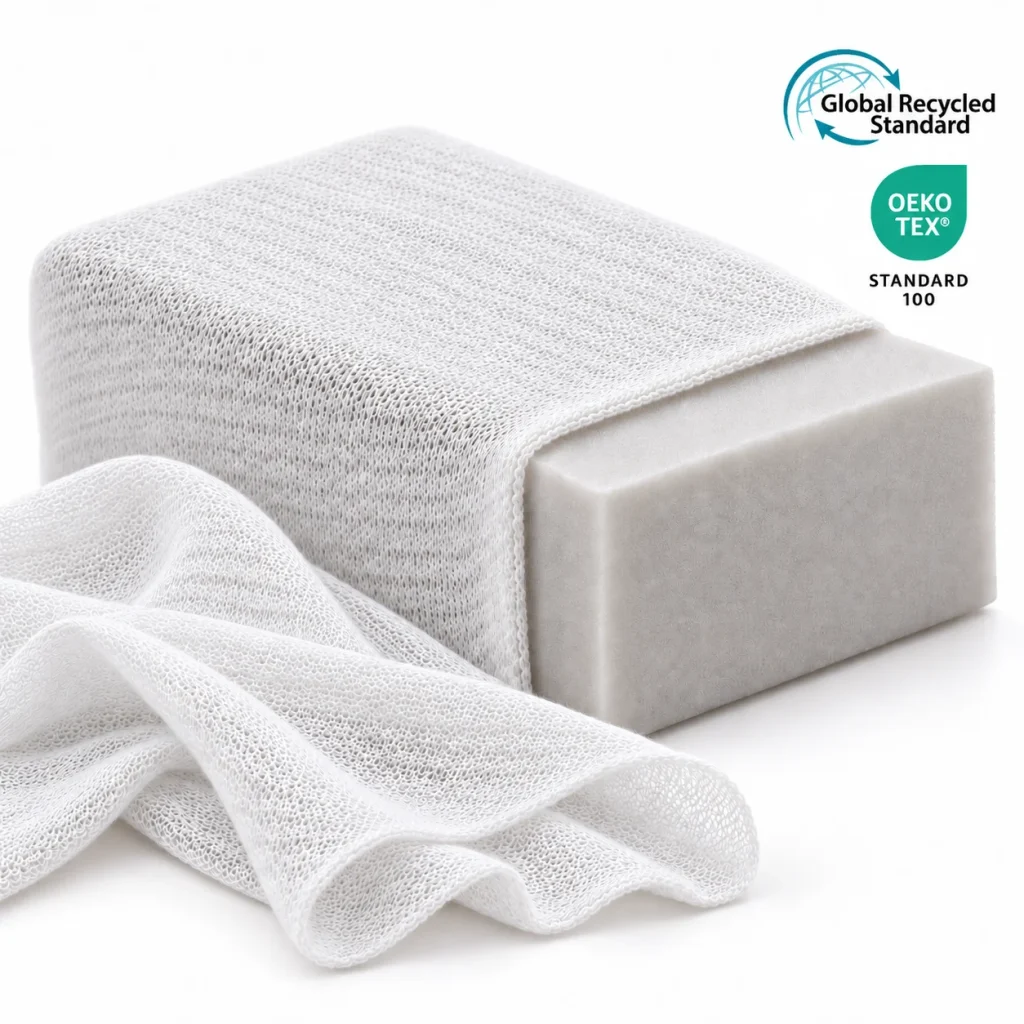
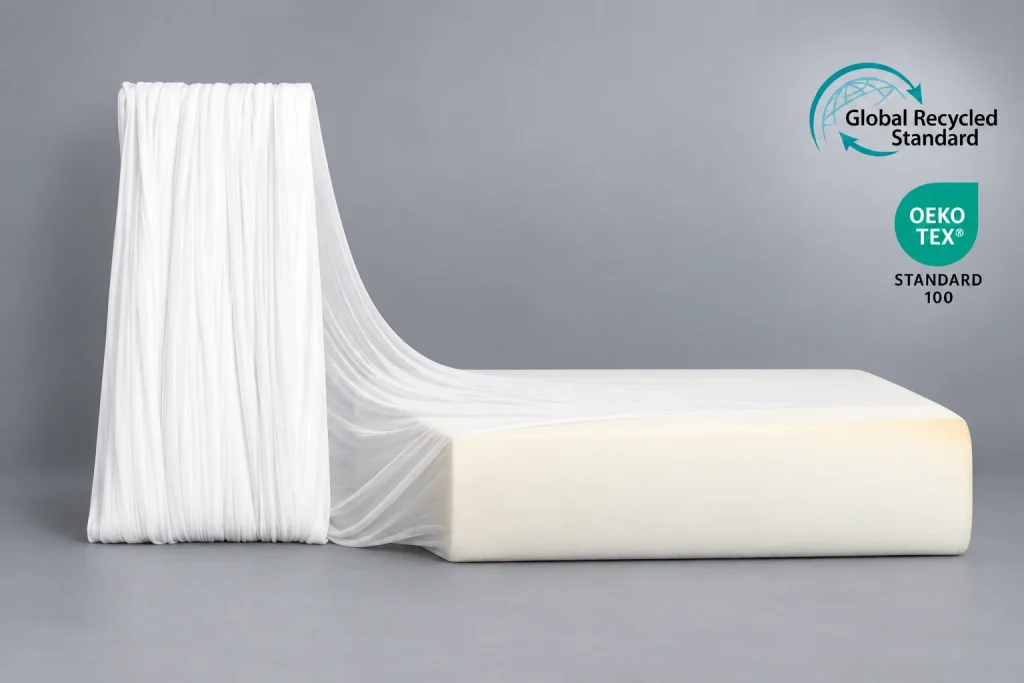
One material, three different roles. We’ve listed them by where we supply the most metres.
Foam wrapping and encapsulation
Stretched over a foam block, the fabric holds the layers together before the core goes into its cover. This is the most common use of the material in mattress and topper production.
The material has to stretch in both directions, return to size once the tension is released, let air through during vacuum packing and not curl at the edge.
One stockinette covers every core size, so you hold fewer stock items and model changes go faster.
Mattress borders and covers
Stretch material for mattress borders lies over the edge without tucks and without strain on the seam. Once off the form it returns to size, so the cover doesn’t ripple on the finished product.
The material has to lie over edges and corners without puckering, keep strain off the seam and hold its size after decompression.
The result is fewer corrections at the sewing stage and fewer complaints about misshapen covers, especially with taller mattresses and reinforced edges.
Upholstered furniture and pillows
In upholstered furniture, stockinette separates the foam from the upholstery fabric in seats, backs and cushions. It works just as well in visco (viscoelastic), memory foam and orthopaedic pillows, where it wraps the insert and protects it from rubbing against the pillowcase.
The material has to protect the foam from rubbing against the upholstery and adjacent layers, and make the cover easier to fit and remove.
The core lasts longer under covers that come off for washing, and assembly runs more smoothly because the cover slides over the knitted fabric.
What this layer does in the construction
The fabric has two jobs in the construction. A third point is down to the designer, but it has a strong influence on the choice of variant.
01
Holds the layers together
The stretched fabric presses the core layers together and holds them in place until they go into the cover. It stretches in both directions, so it conforms to the block without crushing it.
02
Separates the surfaces
The fabric takes the friction that would otherwise damage the foam. This is most appreciated with covers removed for washing and with cores that are frequently taken out.
03
Stays in or comes off
In some constructions the fabric stays in the product permanently; in others it only serves as wrapping during assembly and is removed afterwards. This determines which variant makes sense.
To choose a variant, it helps to know: block dimensions and height, the packing method, the line or machine, how the material is fed, and whether the fabric stays in the product. With this information, we’ll recommend a specific variant.
One knitted fabric, three names
This material reaches us under different names, depending on the market and on whether the enquiry comes from a product designer or from purchasing. Every time, it’s the same product.
Our company takes its name from one of them. Stockinette is exactly this fabric — and it’s where our range began.
If you have a sample or an item code from your current supplier, just send it over. We’ll find an equivalent and compare the specifications before your first order. If the name you use doesn’t appear on this page, just describe what the material is for — we’ll ask about the details ourselves.
Who uses it
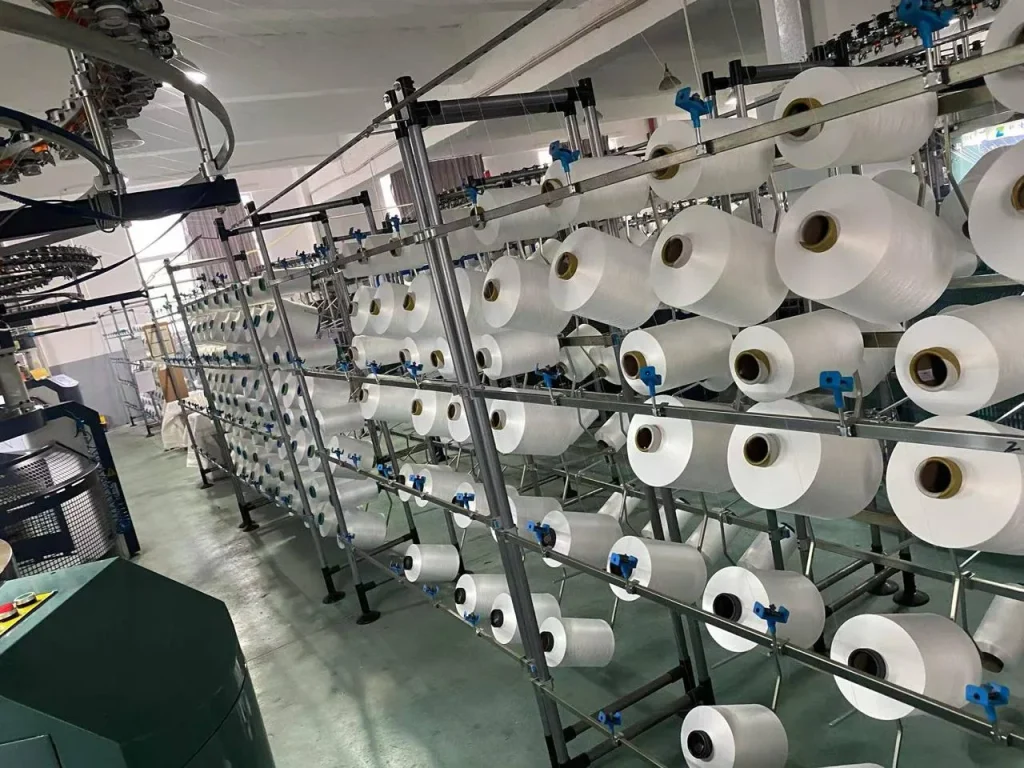
Mattress and topper manufacturers
Encapsulating foam cores and material for cover borders. In series production, what counts is consistent deliveries and one material that works across different core heights. Where the product is vacuum packed, there’s also the question of how it will behave when it decompresses at the customer’s end.
Upholstered furniture manufacturers
In any piece of furniture with foam — in seats, backs and cushions — stockinette forms a layer between the foam and the upholstery. The foam doesn’t rub against the underside of the cover, and the cover slides smoothly onto the frame. Manufacturers of furniture with removable covers appreciate this in particular.
Sewing and upholstery workshops
Material for series orders and for refurbishment. In a sewing workshop, what matters is how the fabric behaves during sewing: whether it curls at the edge or slips from under the presser foot. A consistent width matters too, because it means the cutting plan doesn’t need recalculating for every roll.
Pillow and bedding manufacturers
Visco (viscoelastic), memory foam and orthopaedic pillows need a wrap that conforms to the shape of the insert. Stockinette stretches with the foam, lets air through and protects the insert under the pillowcase from wear.
What we establish when selecting a variant
This material doesn’t have a single data sheet, because the variant depends on the process it has to work in. Below is what we establish during selection. We give the exact values for the chosen variant in our reply to your enquiry, precisely as stated by the supplier.
|
Stretch |
Two-way. This is what allows one material to cover the whole range of sizes. |
|---|---|
|
Composition |
Three types of yarn to choose from: virgin, 100% recycled rPET and PAN (polyacrylonitrile). We’ll help you pick the one that best suits your application and your customers’ requirements. |
|
Weight |
We can supply stockinette in weights from 30 to 100 g/m². The most popular is 50 g/m², and we’ll match the exact value to the block height and how the fabric is stretched. |
|
Colour |
White as standard. On request we also supply a black version, which keeps the foam inside the product out of sight. |
|
Width |
Chosen to suit your cutting plan and production line format. |
|
Finish |
Agreed during selection. It determines how the material behaves in contact with the core. |
|
Delivery form |
Matched to how you feed the material in production. |
Documentation and fire retardancy
On request, we provide documents issued by the supplier. If your purchasing department needs specific confirmation — of composition, raw material origin or testing for harmful substances — just let us know.
We do not state fire retardancy parameters for stretch fabrics. If your construction requires a material tested for this, Crib 5 fire retardant fabrics are the right choice.
Why Stockinette
We are a Polish trading company working exclusively with businesses. We partner with plants that buy material for ongoing production. Our company name, in fact, comes from this very fabric.
How we work together
01
Process and application
You tell us what you make, where in the construction the material works, the dimensions, how the product is packed and which line it’s made on.
02
Choosing the variant
We suggest which variant suits the application and what’s worth checking before a decision is made.
03
Sample and specifications
We send a sample for you to test on site, together with the specification of the chosen variant.
04
Terms and delivery
We agree prices, quantities, how the material is supplied and the delivery details.
Frequently asked questions
Let’s match the variant to your process
A short note is all we need: what you make, where in the construction the material works and how the product is packed or sewn. Based on that, we’ll recommend a variant, give you its specification and agree the details of the sample.
Stretch fabric enquiry
The more we know about your process, the better our answer. Useful details: the type of product, where the material sits in the construction and how the product is packed or the material fed on the line.
If you have an item code or a sample from your current supplier, mention it — we’ll compare the specifications and find an equivalent.
We reply within one working day.