
Crib 5 fire retardant fabrics for furniture and furnishing manufacturers
We supply two materials with test-proven fire retardant performance: FR Crib 5 fabric, which works both as upholstery and as a barrier layer (interliner), and the featherproof FR Crib 5 inlet for cushions with natural fillings. Both are 100% cotton and tested to BS 5852 with the Crib 5 ignition source — testing required in the UK market and in public buildings, among others. We’ll help you match the material to your construction and to the requirements of the project specification.
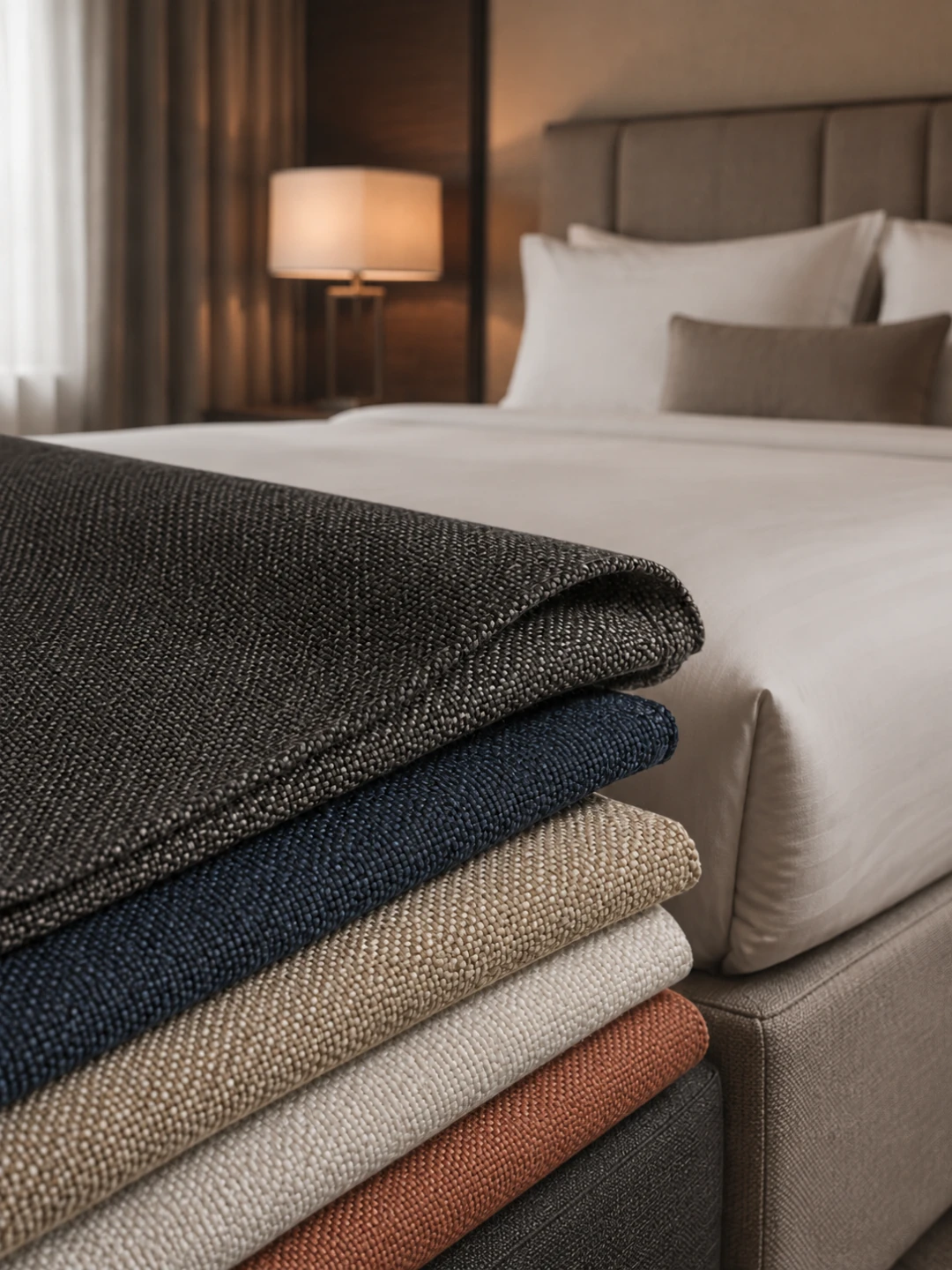
Composition
100% cotton in both materials.
Role in the construction
Upholstery, lining, a barrier beneath the top fabric or a sealed cushion casing.
Testing
BS 5852 with the Crib 5 source and TB 117. Documentation on request.
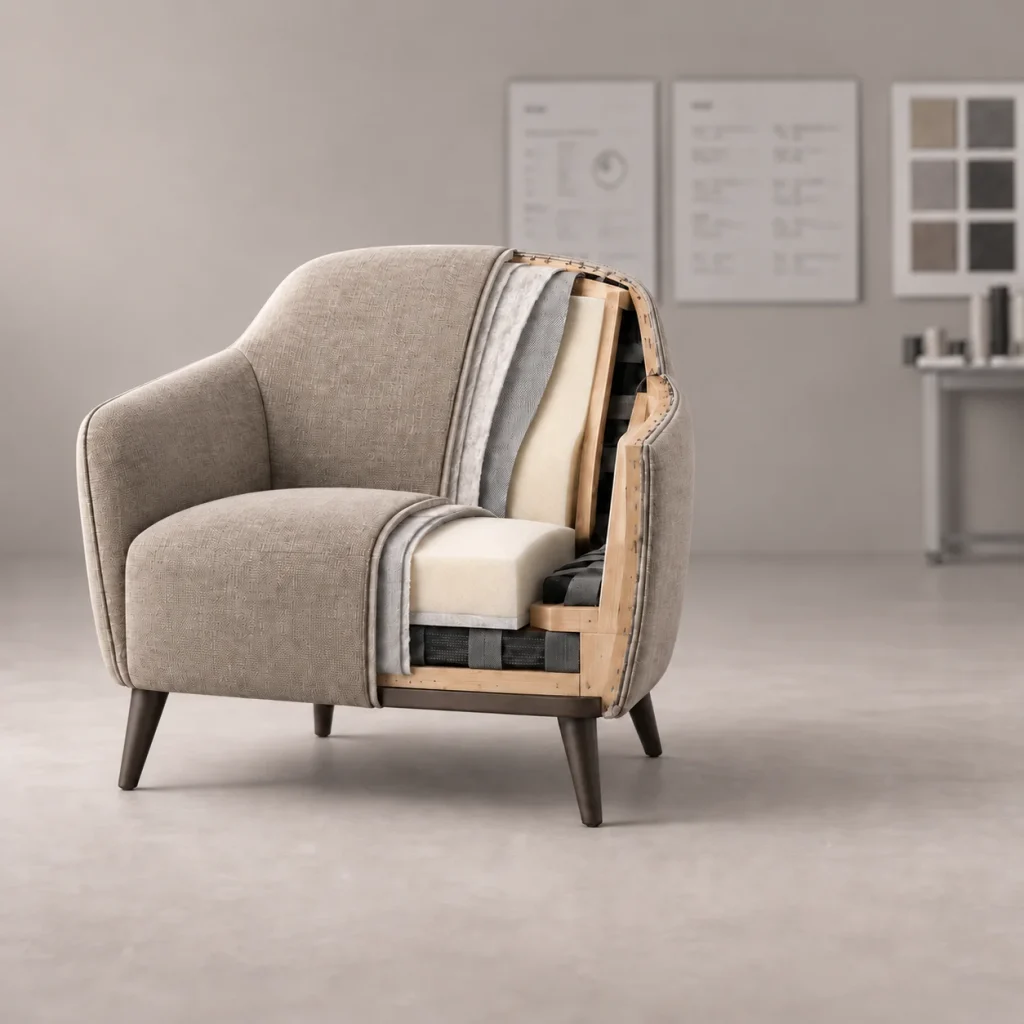
The layers beneath the upholstery determine how safe a piece of furniture is
The upholstery fabric is chosen for its looks and how well it stands up to use. But what happens when the furniture meets an ignition source is largely decided by what lies beneath it: the interlayer, the cushion casing and the filling. These components never make it into a pattern book, yet they come up every time a project specification is discussed.
Fire retardancy is confirmed by a laboratory: it tests how the material behaves against a defined ignition source and records the result in a report. That’s why technologists and purchasing departments are interested above all in which test was carried out and on which combination of materials.
Some industries and markets set requirements well above the average. This applies in particular to production for the UK market, furnishing public buildings, and hotel and contract projects, where the specification names a specific test and a specific ignition source. In such projects, the supplier is expected to provide a test report.
Upholstered furniture is more than a single layer. The top fabric, interlayer, cushion casing, filling and frame together form a composite in which every element counts. Change the filling or the top fabric and the whole behaves differently. That’s why we start selecting a fire retardant material by asking about the construction and about the document you’ll need at handover.
Two materials, two places in the construction
The same composition and the same scope of testing, but completely different jobs. FR Crib 5 fabric works in and under the upholstery layer; the inlet works inside the cushion.
FR Crib 5 fabric
An upholstery fabric for upholstered furniture. It works as furniture lining and as a protective layer beneath fabrics that do not pass fire retardancy tests on their own — in that role it acts as a barrier and limits the spread of fire within the construction.
It is most often used in sofas, armchairs and corner sofas, hotel and contract furniture, and in the inner layers of outdoor furniture.
It lets you keep the upholstery chosen for your collection and meet the technical requirements with a layer hidden underneath.
FR Crib 5 inlet
Fabric for the inner casings of furniture cushions with natural fillings. It keeps feathers and down inside while having test-proven fire retardant performance of its own.
It is most often used in seat and back cushions in domestic, hotel and contract furniture, as well as in selected outdoor furniture.
A single casing holds the natural filling and meets the project’s material requirements, so there’s no need for two layers.
FR Crib 5 fabric — upholstery, lining and barrier
This is a 100% cotton upholstery fabric that can be used in three ways: as furniture upholstery, as lining and as a barrier layer beneath the top fabric. In that last role it is often called an interliner or barrier cloth. It is placed between the upholstery and the filling so that fire cannot reach the inside of the construction as quickly.
The typical scenario looks like this: a collection was designed around a specific upholstery fabric, and that fabric does not achieve the performance required in the test configuration named in the specification. A barrier layer then lets you work on the combination of materials instead of redesigning the entire range.
01
Upholstery fabric
Responsible for the look, feel and durability of the furniture. It is often chosen to suit the collection design and does not always achieve the required performance in a given test configuration on its own.
02
FR Crib 5 fabric
Lies directly beneath the upholstery or works as the furniture lining. Its job is to stop the fire before it reaches the filling.
03
Filling and frame
The foam, natural filling and supporting frame are separated from the ignition source by the barrier layer.
Important: using a barrier layer does not in itself mean that the finished furniture meets the requirements of a given standard. The result depends on the whole combination of materials, the type of filling, the top fabric, the construction of the product, how it is made and the test conditions. If the project requires confirmation for the whole composite, it’s worth agreeing its make-up before production starts — we’ll help you choose the material and tell you what documentation we have.
FR Crib 5 inlet — a sealed cushion casing
Natural filling gives a cushion a softness and drape that foam cannot reproduce. It does, however, have one awkward trait: feathers and down escape through a weave that is too loose and, above all, through a poorly made seam. FR Crib 5 inlet is a featherproof and downproof fabric made specifically for the inner casings of furniture cushions.
Two requirements meet in this one component. The casing has to keep the filling in place throughout the life of the furniture while meeting the project’s material requirements. That’s why we’re talking about a material tested for fire retardancy, not an ordinary lining.
The inlet works only inside the cushion, beneath the outer cover. It is not a covering material, and we do not claim resistance to moisture, UV radiation or weathering for it.
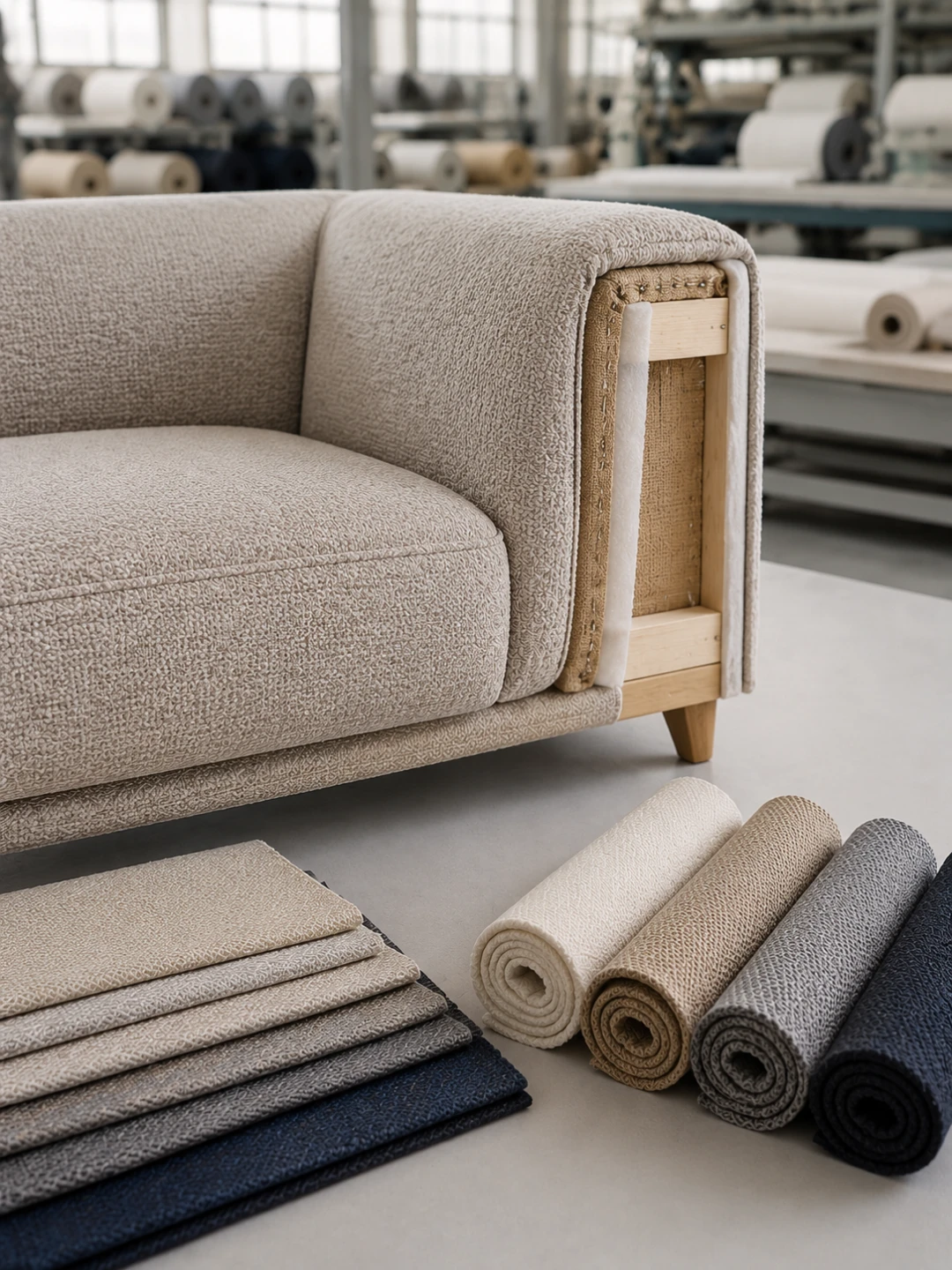
Where these materials work
Upholstered furniture manufacturers
Sofas, armchairs, corner sofas and beds where the collection was designed around a specific upholstery fabric. FR Crib 5 fabric goes in as lining or an interlayer, so technical requirements can be met without redesigning the whole range.
Hospitality and contract furnishing
Furniture for lobbies, rooms, suites and common areas. Here the material is decided by the project specification, and a document has to be shown at handover. We provide the test documentation on request, before production starts.
Feather and down cushion manufacturers
Workshops sewing furniture cushions with natural fillings. The inlet keeps feathers and down inside, seams included, and brings a material with confirmed fire retardant performance into the construction.
Outdoor furniture manufacturers
Higher-end garden and patio furniture. Both materials work inside the construction: the FR fabric in the upholstery, the inlet as a cushion casing hidden beneath the outer cover.
Standards and laboratory testing
Both materials meet the requirements of the tests listed. Their performance was confirmed by tests carried out by recognised laboratories, including Intertek, SATRA and SGS. We provide detailed documentation on request.
These tests are most often requested by customers producing for the UK market, designers furnishing public buildings, and those writing hotel and contract specifications. TB 117 applies to the US market.
If you need a specific document at handover, or testing on a particular combination of materials, just let us know.
|
BS 5852, Schedule 3, Crib 5 |
Test with the ignition source designated Crib 5 — a wooden crib of a defined size. |
|---|---|
|
BS 5852, Schedule 4, Part 2 |
Test with a smouldering cigarette as the ignition source. |
|
BS 5852, Schedule 5, Part 3 |
Test with an ignition source equivalent to a match flame. |
|
TB 117 |
Requirements applied in the US market to materials in upholstered furniture. |
|
Laboratories |
Intertek · SATRA · SGS |
Documentation available on request
We provide the original documents together with information on which laboratory carried out the tests and what was tested. We tailor the scope of documentation to the application and the target market.
Why Stockinette
We are a Polish trading company working exclusively with businesses. We partner with manufacturers who choose materials for a specific construction and market. That’s the stage where we can help most.
How we work together
01
Application
You tell us what you make, where in the construction the material works, which market the product is for and what your customer requires.
02
Choosing the material
We suggest which material suits that place in the construction and what’s worth checking before a decision is made.
03
Sample and documentation
We send a sample for you to test on site, together with the available test documentation.
04
Terms and delivery
We agree prices, quantities and delivery details.
Frequently asked questions
Let’s match the material to your construction
A short note is all we need: what you make, where in the construction the material works and which market the finished product is for. Based on that, we’ll recommend the right variant, send you the available documentation and agree the details of the sample.
Fire retardant material enquiry
The more we know about the application, the better our answer.
It helps to include the type of product, where the material sits in the construction, the target market, the required test or document, your estimated requirements and the project timeline.
We reply within one working day.