
Fabrics for upholstered furniture manufacturers
We supply three materials that work in the construction of upholstered furniture: FR Crib 5 fire retardant fabric for upholstery and lining, stretch stockinette for the layer over the foam, and featherproof inlet for cushions with natural fillings. We match them to your customer’s requirements and to your cutting plan.
What ends in rework or a complaint
Manufacturers of furniture for showrooms and hotels come to us with these problems. All of them can be anticipated when choosing the material.
Fire retardancy requirements clash with the design
A contract customer requires a Crib 5 test that the upholstery chosen for the collection doesn’t pass. Changing the top fabric then means changing the design and sending the customer new samples. A barrier layer beneath the upholstery solves this with no visible change to the furniture.
Foam rubs against the upholstery
In the seat and cushions, foam works under every load. Without a layer between it and the upholstery that it can slide over, it rubs directly against the top fabric — and with removable covers, there’s added resistance every time the cover is pulled on.
Roll width translates directly into waste
A cutting plan is laid out for a specific material width. If the next delivery arrives narrower, the plan has to be recalculated from scratch, and the difference ends up as cutting waste. That’s why we give the width before quoting and ask what you are counting on.
Every layer of the furniture has its own material
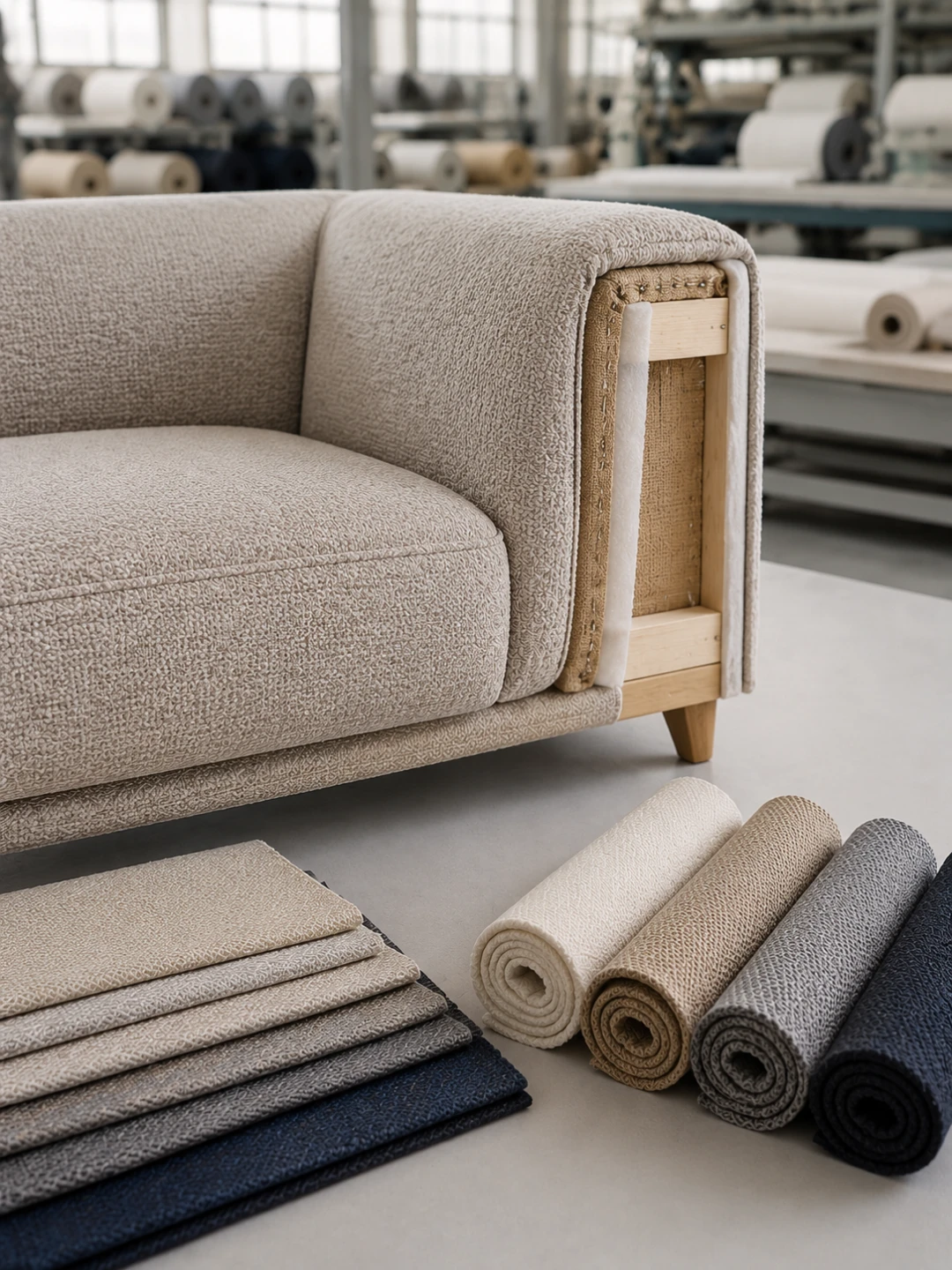
In upholstered furniture, each layer does a different job. The upholstery is responsible for looks and abrasion resistance, the layer beneath it for how the composite behaves in contact with fire, the layer over the foam for slip, and the cushion casing for keeping the filling inside.
Below is what we supply for each layer. Fire retardancy requirements are covered on the Crib 5 fire retardant fabrics page, and the properties of the layer over the foam on the stretch fabrics page.
|
Upholstery and lining for contract furniture |
FR Crib 5 fabric: 100% cotton, tested to BS 5852 with the Crib 5 source and TB 117 |
|---|---|
|
Layer over the foam |
Stretch stockinette: 30–100 g/m² (most often 50 g/m²), white or black, two-way stretch |
|
Cushions with natural fillings |
FR Crib 5 inlet: 100% cotton, featherproof and downproof |
Where the material goes in furniture production
The three product types where our customers use the most metres.
Sofas, armchairs and corner sofas
Seats and backs made of foams of different densities, with cushions often removed for washing. The layer over the foam determines whether the cover goes on and comes off without resistance, and whether the core wears from the inside.
Upholstered beds and headboards
Large, flat surfaces stretched over a frame, where every irregularity in the material shows against the light. A consistent roll width and batch-to-batch repeatability matter, because components from two deliveries end up side by side.
Contract furniture and fit-outs
Hotels, student halls and public spaces. A document has to be shown at project handover, and the furniture is used more intensively than at home. Hence heavier materials and a barrier layer, for which we provide the test report.
What our role is
Furniture material is chosen for a specific foam and a specific cutting plan. That’s why, before we recommend an item, we ask about the type of furniture, your customer’s fire retardancy requirements and the width your cutting plan is based on. Only then do we send a sample for testing.
What you can count on
Frequently asked questions from furniture manufacturers
We’ll match the material to your furniture
The type of furniture, your customer’s fire retardancy requirements and the width your cutting plan is based on are all we need. We’ll send back a material proposal for each layer together with a sample for testing.